
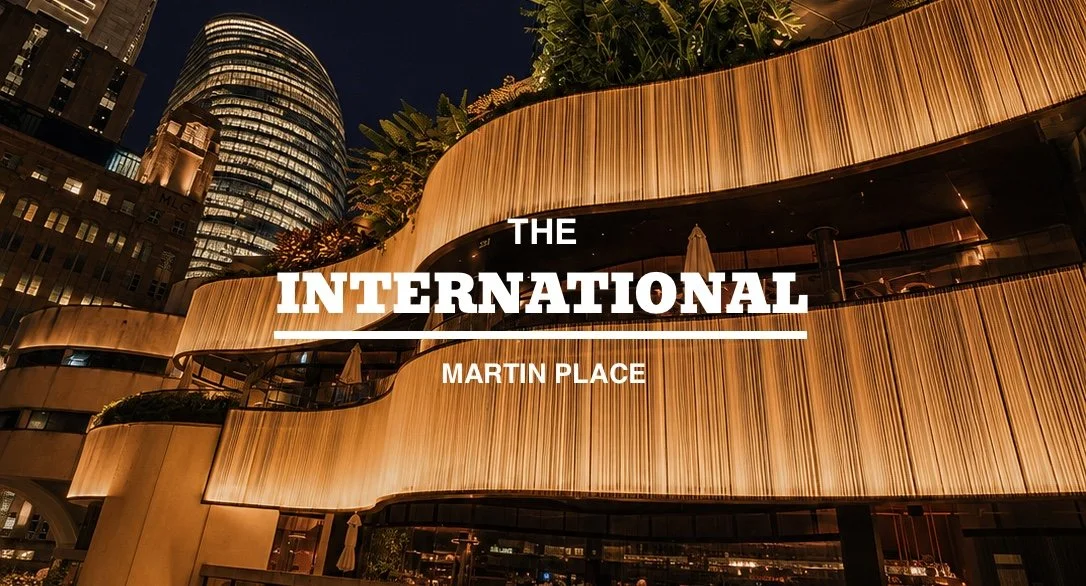
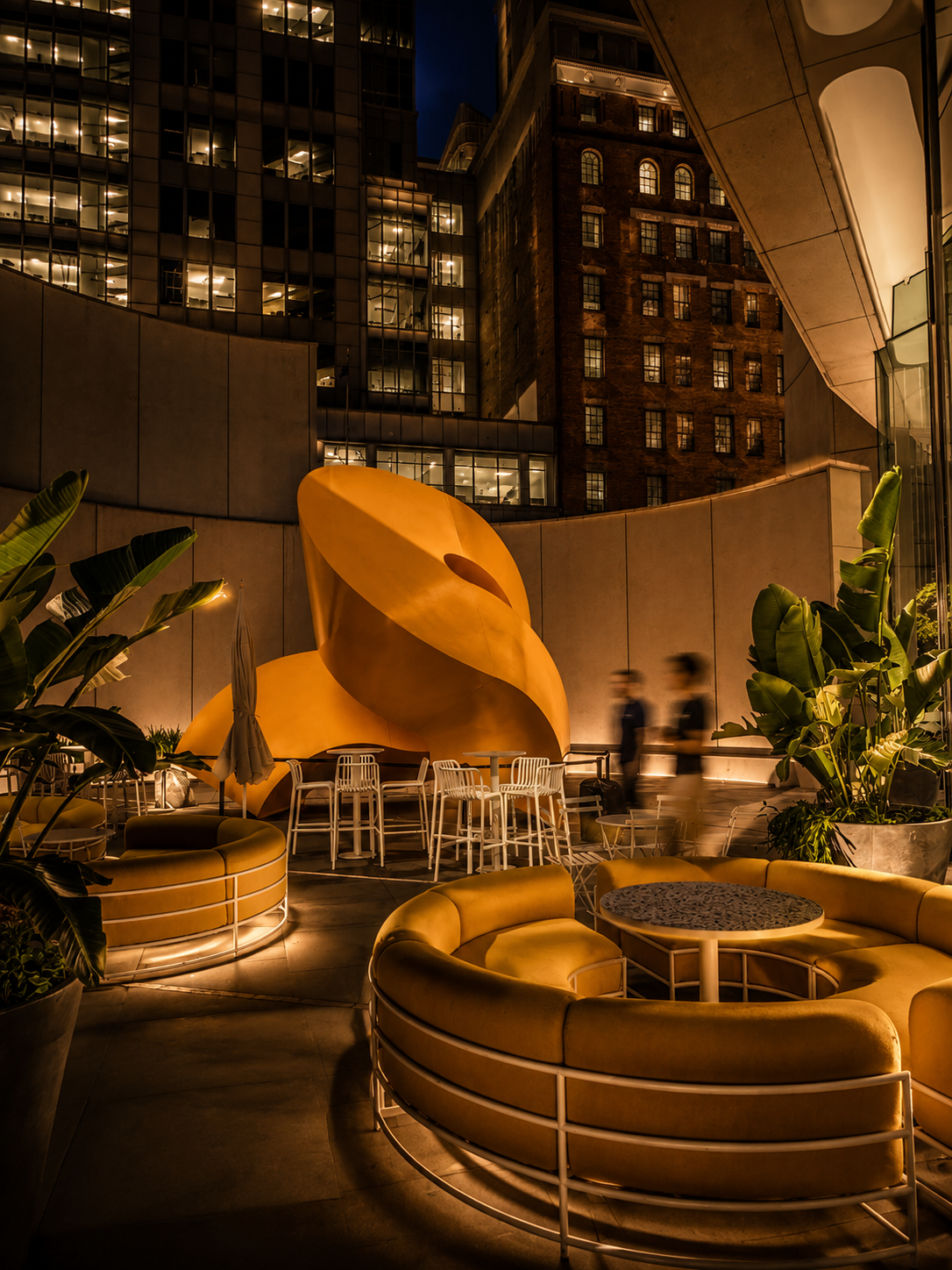
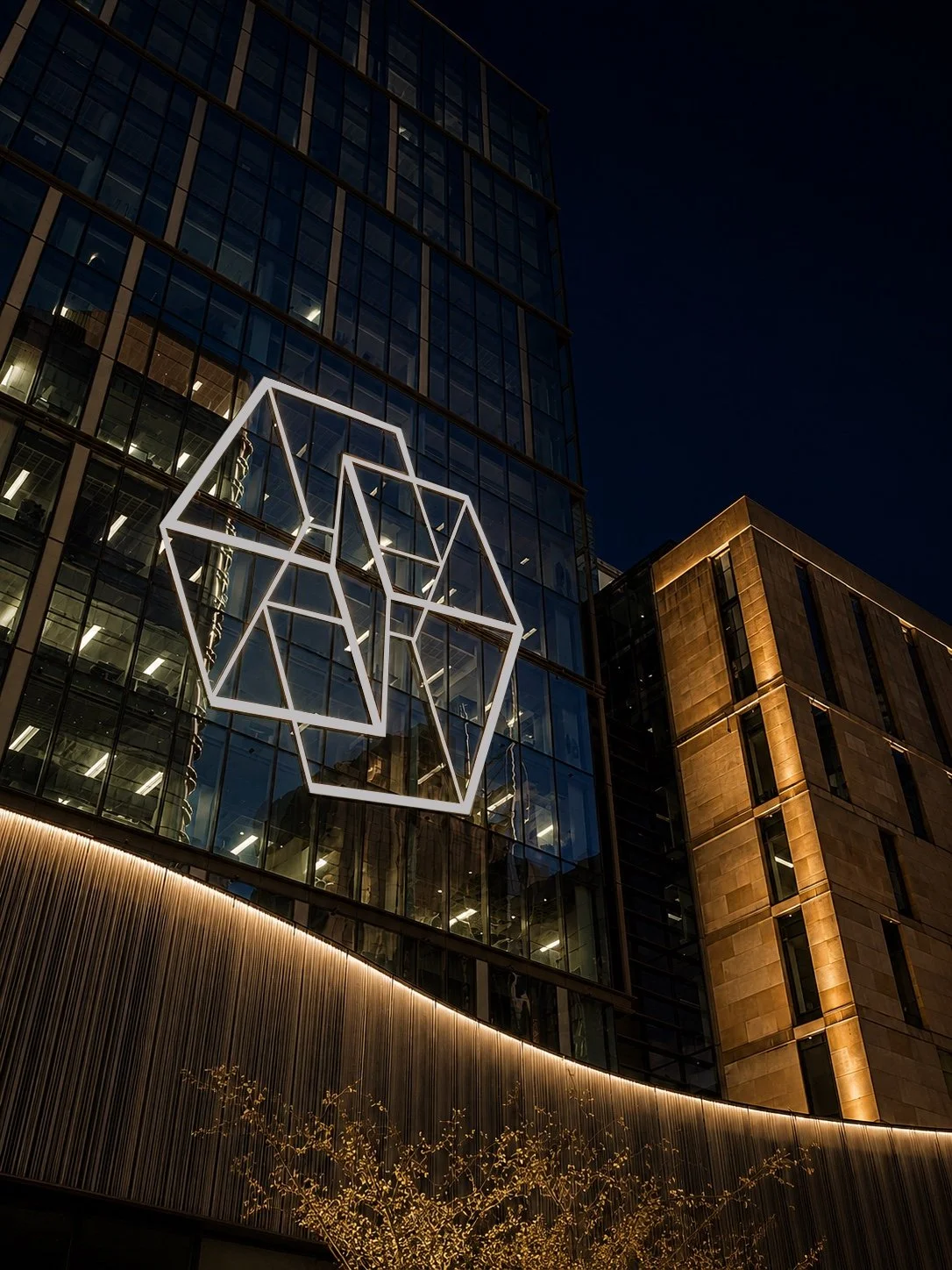
Delivered under an ambitious eight-week program, The International at 25 Martin Place stands as a tightly coordinated collaboration between Buildcorp and The Point Group, translating bold vision into a complex three-level hospitality precinct without sacrificing quality. Through close alignment during pre-construction, design elements were refined and streamlined to meet the accelerated timeline, resulting in the seamless realisation of three distinct venues—The Wine Bar, The Grill, and The Panorama Bar—each elevated above Martin Place and unified by bespoke finishes, lighting, and architectural detailing that reflect a cohesive yet differentiated aesthetic.
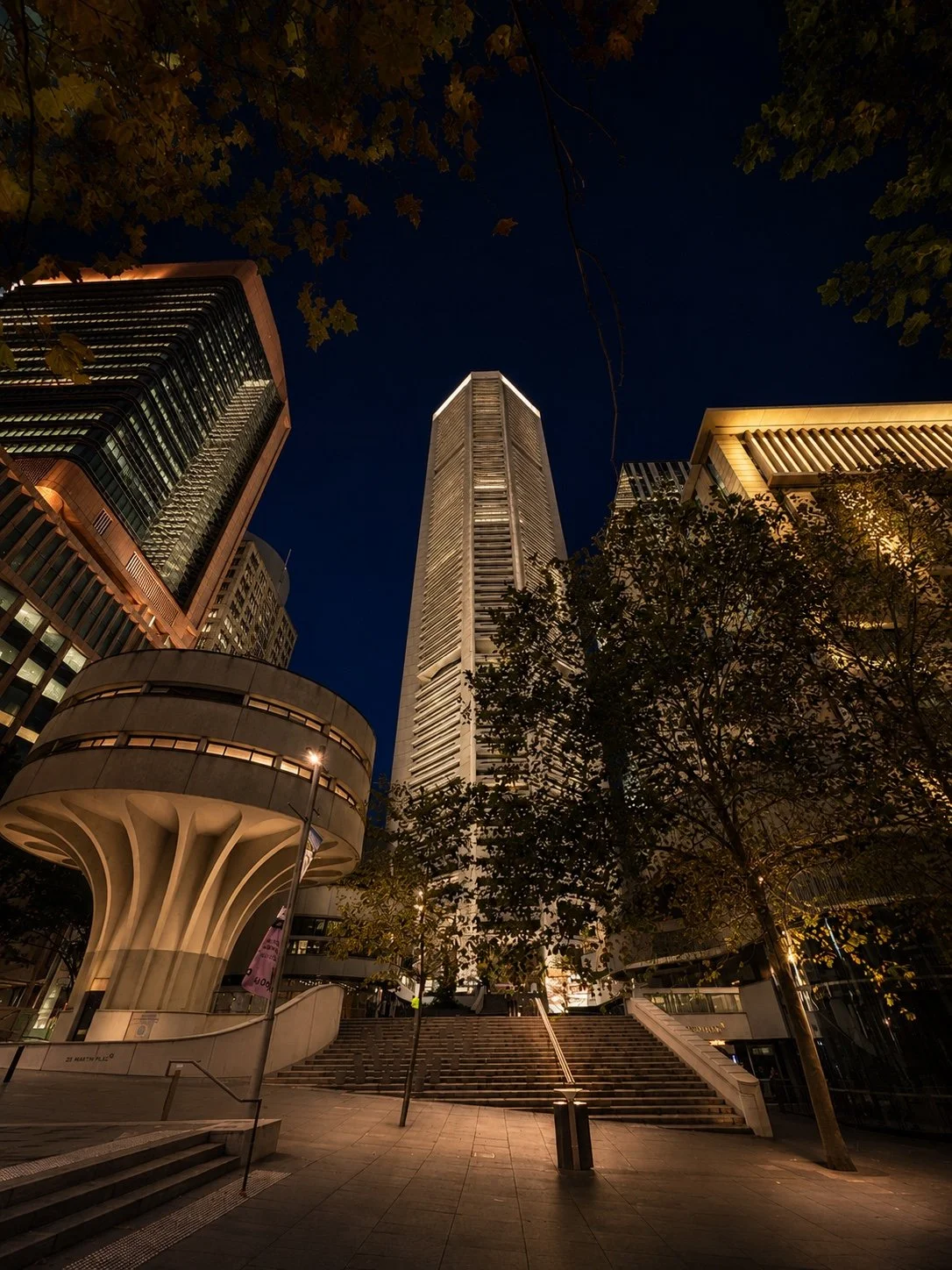
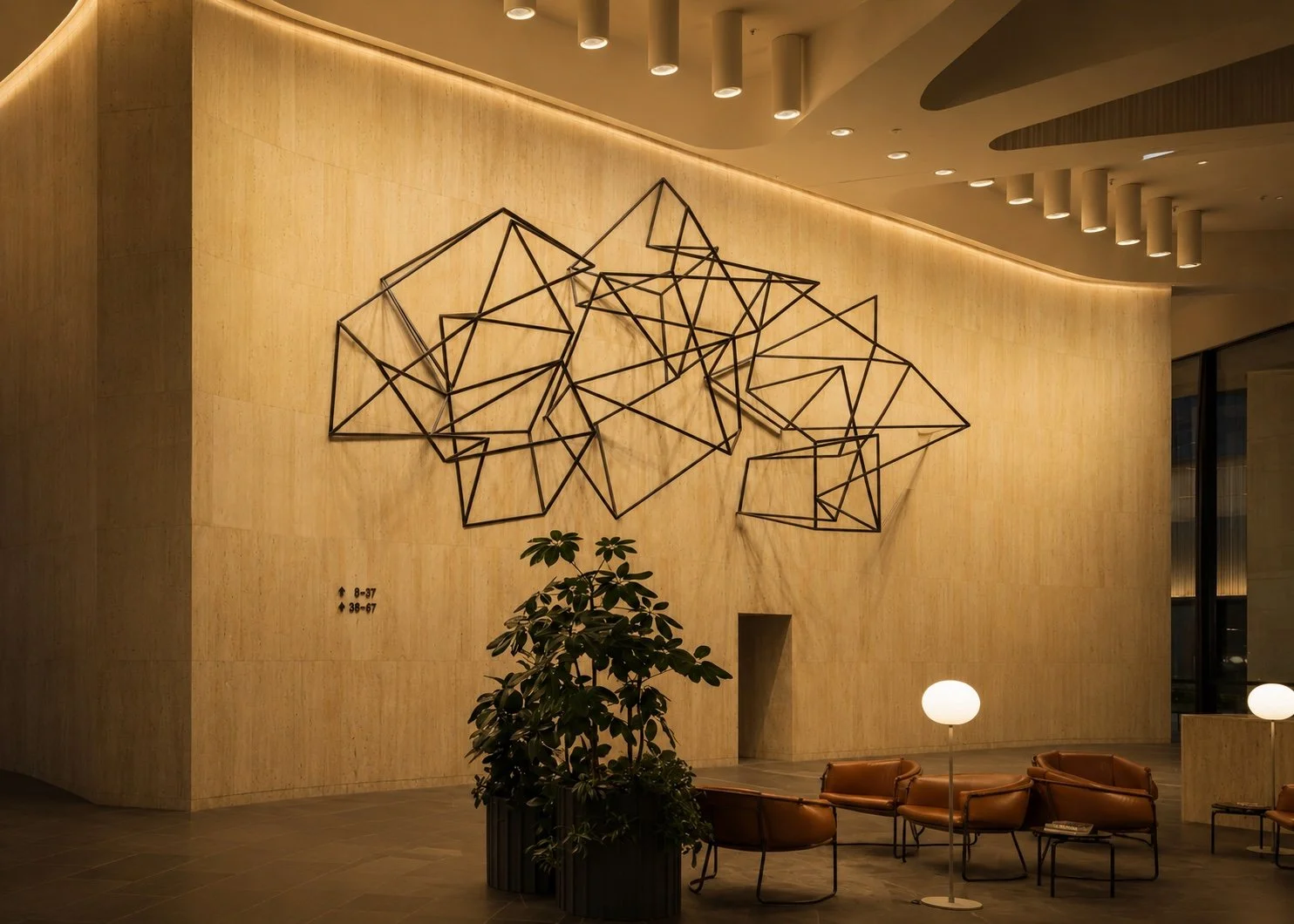
Set within the enduring modernist geometry of 25 Martin Place, The International occupies a building that was never conceived as mere commercial real estate, but as a total cultural environment. Designed by Harry Seidler, the MLC Centre embodies a Bauhaus-derived ideal in which architecture, art, and public space are inseparable. This ambition is made explicit through the integration of works by international figures such as Josef Albers—whose sculpture Wrestling and monumental tapestry lend the precinct intellectual gravity—as well as artists like Charles Perry and Robert Owen, whose works activate the building’s voids and surfaces. The result is a rare condition in Sydney: a commercial site that still carries the cultural seriousness of post-war modernism, where art is not applied but embedded——in to which, the work of Mikey Freedom now becomes apart of.
Within this framework, under direction of interior designer Anna Hewett, The International extends rather than competes with the building’s legacy, translating Seidler’s disciplined modernism into a contemporary, multi-level hospitality experience. Each venue—The Grill, The Wine Bar, and The Panorama Bar—reads as a variation on a theme, moving from grounded material refinement to social fluidity and finally to elevated spectacle. Marble, timber, and metal anchor the lower spaces with a sense of permanence, while layered seating, ambient lighting, and open terraces introduce looseness and movement as one ascends. The design does not mimic the past but converses with it, retaining the clarity of line and structure while softening it through atmosphere and use.
What binds the entire precinct is a continuity of intent: a belief that space should be experienced, not merely occupied. The International’s interiors operate as a contemporary counterpart to the integrated artworks of the MLC Centre—less didactic, perhaps, but similarly concerned with how people move, gather, and perceive. Together, they form a vertical narrative of the city itself, where modernist ideals of order and unity meet the present-day appetite for sociability and experience. In this sense, dining, art, and architecture collapse into one another, and the building continues to function, as Seidler intended, not simply as a container of activity, but as a cultural proposition in its own right.
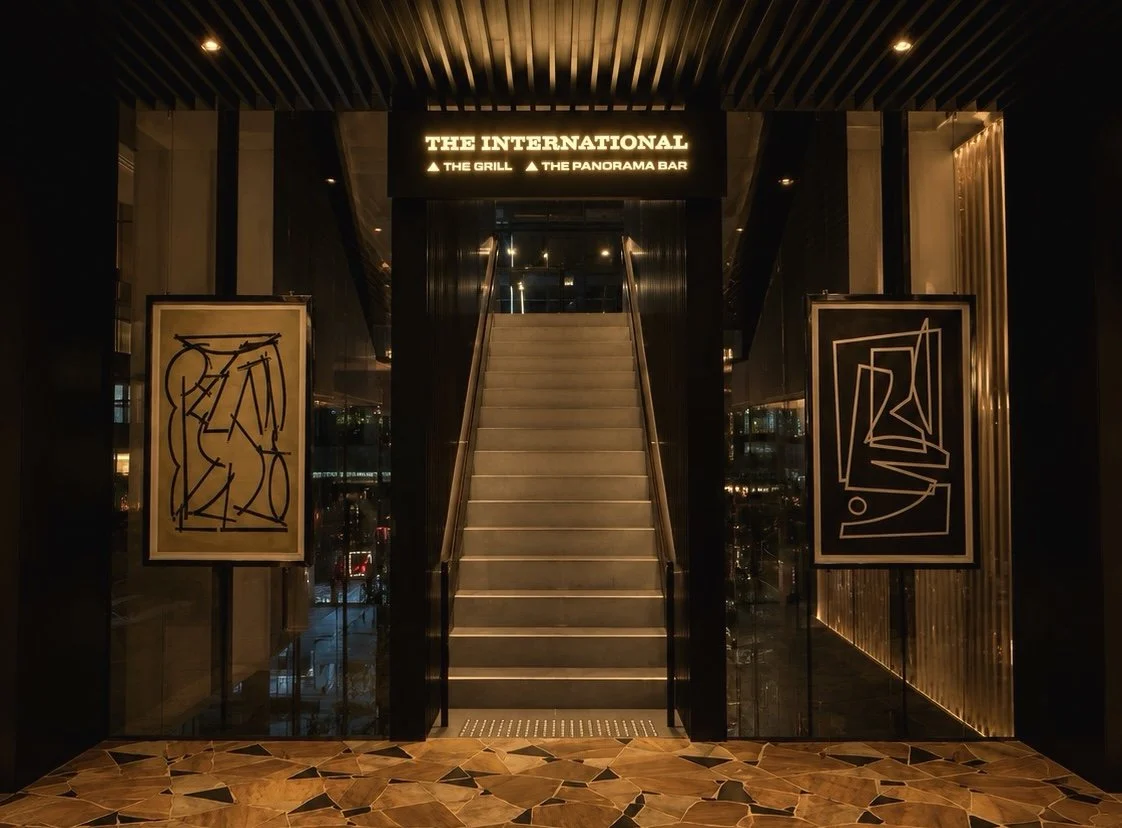
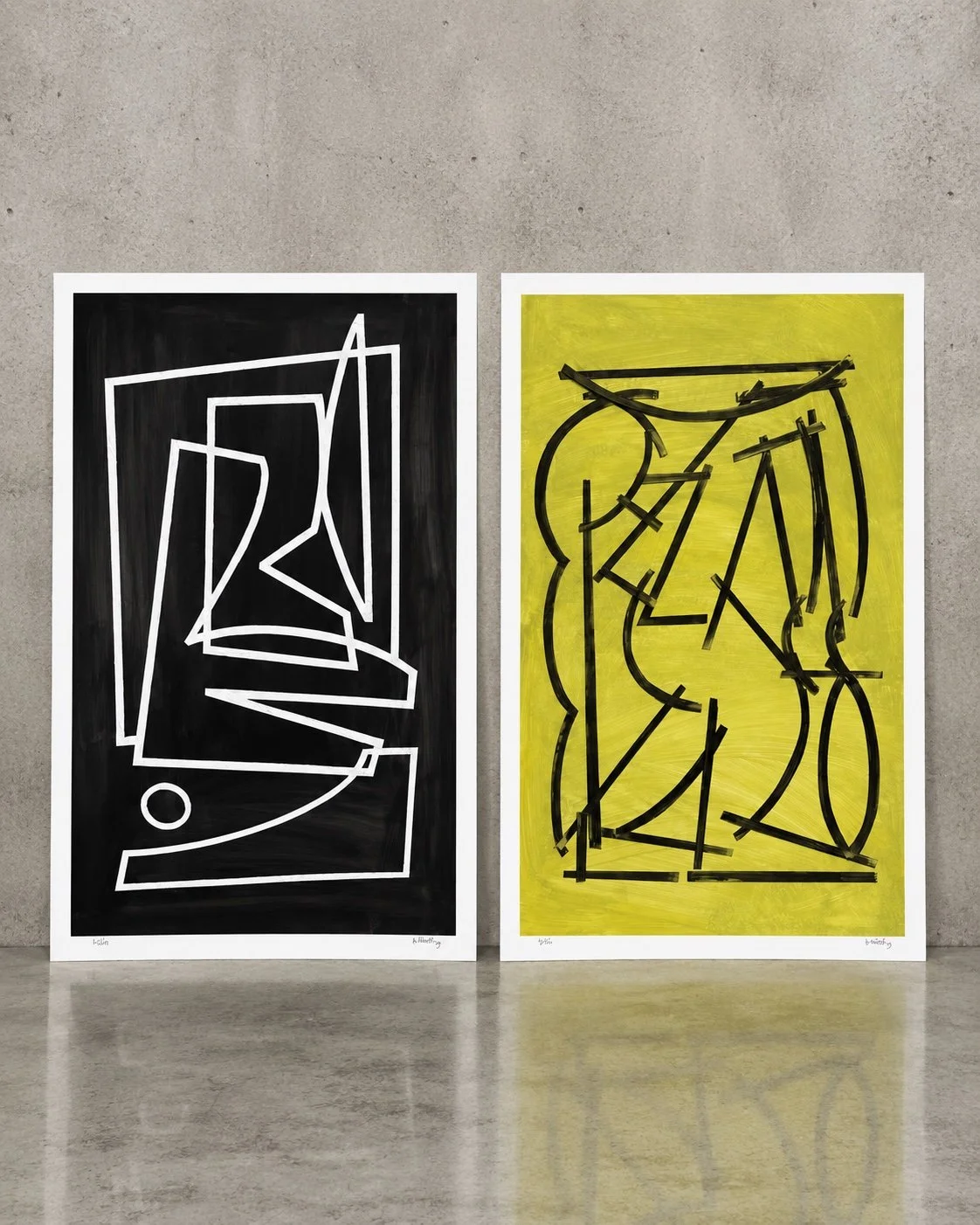
These works guarding the ascent to The Grill and The Panorama Bar, transform painted cardboard into a rigorous modernist language of line, mass, and human presence.
The black-and-white composition asserts an architecturally, authority through restraint: a single cut and mounted form disrupts the flatness of the brushed black surface, turning drawing into object and abstraction into structure. Its handmade construction — visible in every edge and contour — giving the work a rare physical immediacy.
The lime yellow relief expands this vocabulary into something intensely structural, though more human. Carefully cut, painted, and layered, black elements assemble into a fractured human form that emerges and dissolve within the composition. What first appears graphic gradually reveals itself as painstakingly balanced and built, each piece carrying the evidence of touch, labor, and decision. Together, the works possess the force of consequential contemporary constructions — part collage, part sculpture, part painting — insisting on materiality in an era of seamless images.
These works enter into dialogue with the building’s modernist integration of art and architecture. Their painted and assembled cardboard forms transform abstraction into constructed relief, balancing geometric rigor with the visible evidence of cutting, layering, and touch. Together, Mikey Freedom extends the modernist project through materiality, labor, and fragmented human form.